
Canoe Safety
We take safety seriously at the RCABC. Many of our courses have a strong focus on risk management, rescue skills, and environmental awareness. A great way to start is to check out the RCABC Safety Pamphlet.

Fundamental Canoe Safety Practices
A few of the most basic safety tips for canoeing include:
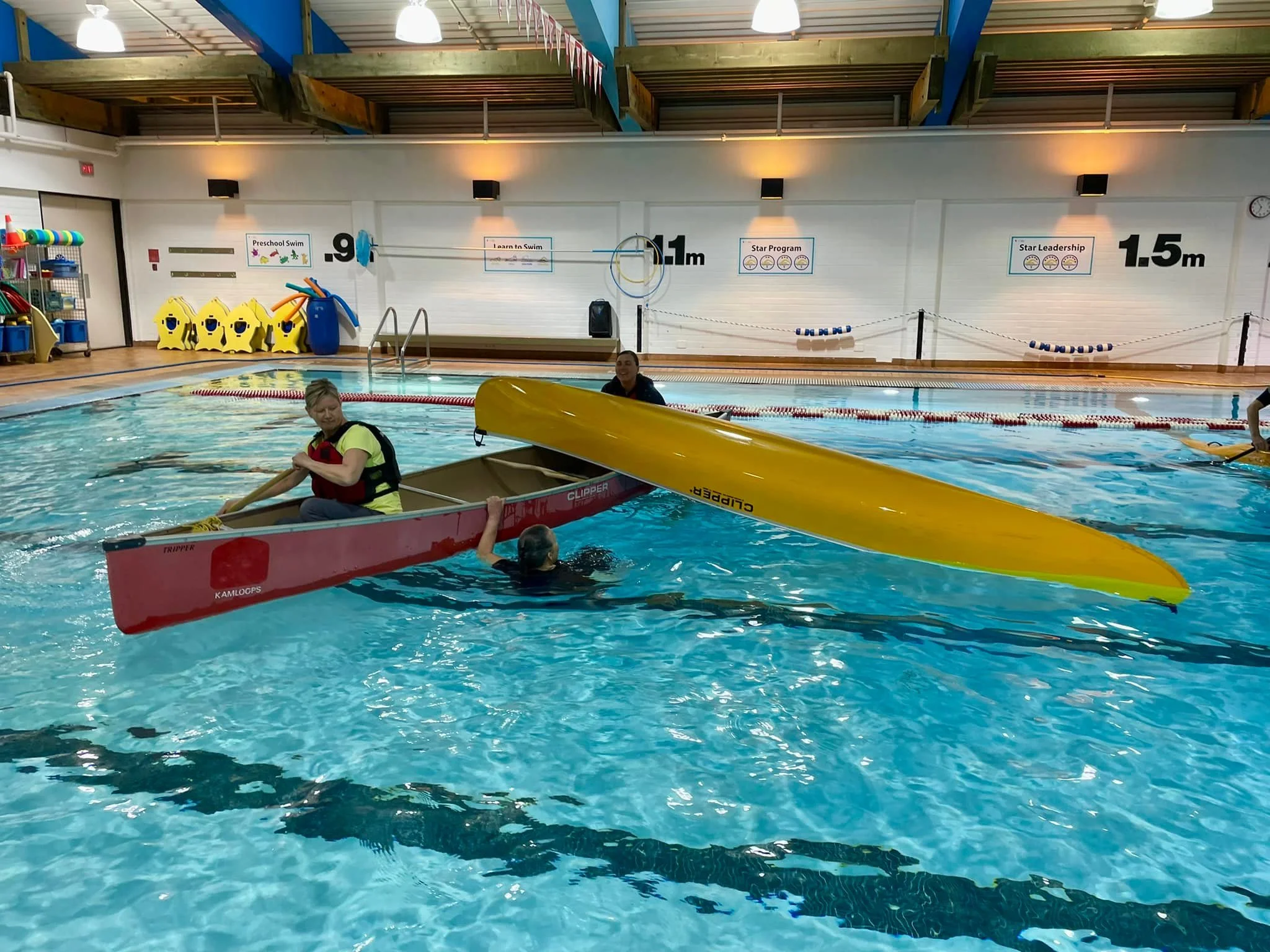
Learning proper paddling technique as well as self rescue and assisted rescues for you and your group.
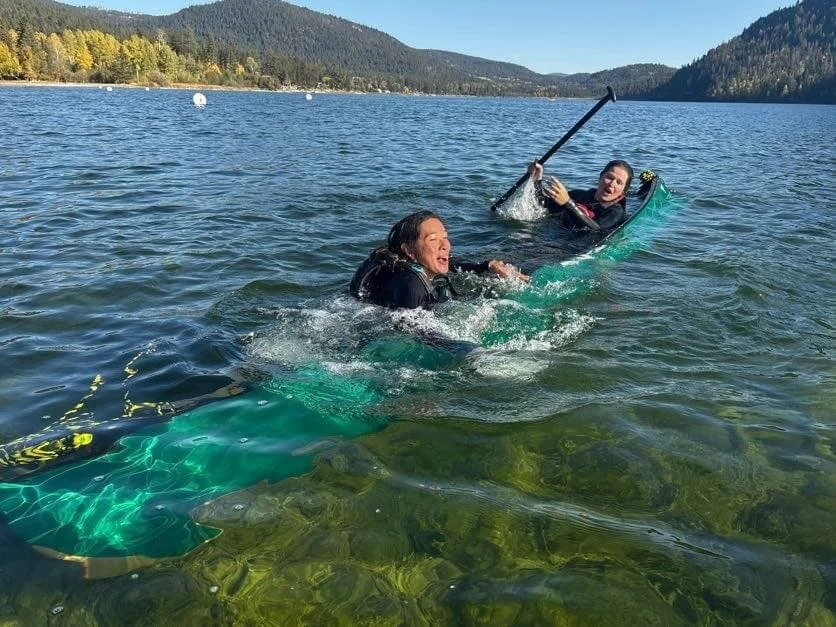
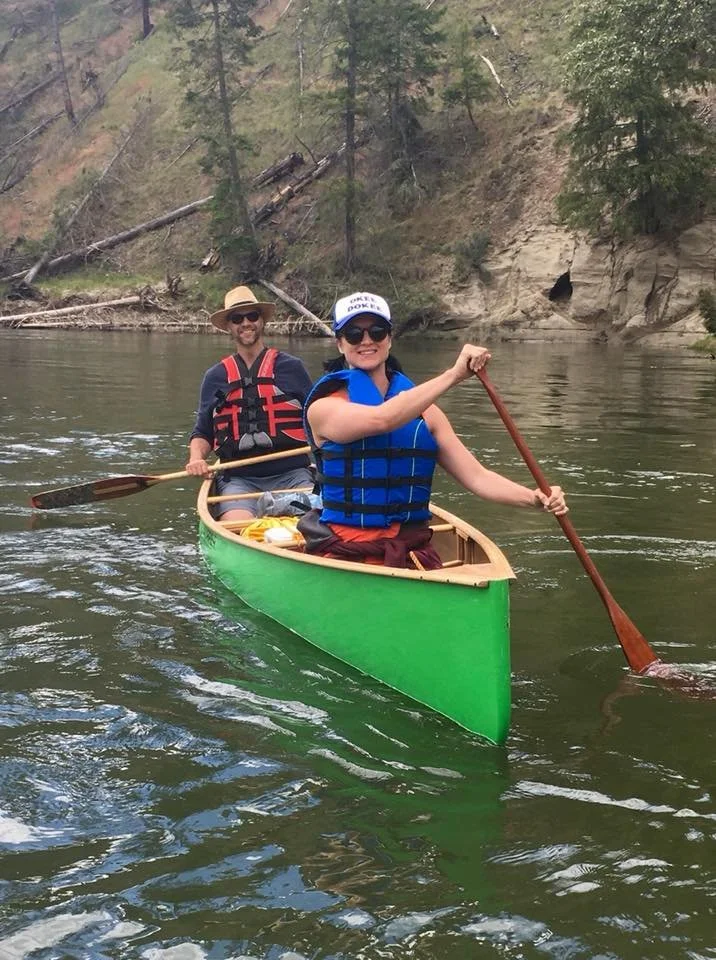
Always wear your PFD and dress and be prepared for immersion in cold water.
Alcohol and drugs DO NOT belong on the water. Never canoe impaired.
Make sure your canoe has flotation in case of a capsize. Paddle close to shore when you can.
Familiarize yourself with local weather patterns and hazards. Consider using forecasting apps.
Whenever possible paddle in a group of 3 boats. Research your route. Carry first aid and know how to use your navigation equipment. Let others know where you are going and when you will return.
Carry standard safety and rescue equipment such as a spare paddle, throw bag, whistle, bailer, spare food, water, fire starter, and clothes in a dry bag.
Canoe Construction and Design Basics
Any canoe is better than no canoe! And the correct number to own is N+1 where N is the number of canoes you currently own!
Paddle the canoe you own with pride no matter what the make or model. Having the right canoe for what you are doing is actually a pretty important part of canoeing safety. Similar to paddling skills, anyone can paddle any canoe in a calm sheltered bay...
The following information may be useful as you learn and progress your paddling skills and level up your equipment for more demanding trips:
Generally speaking Coleman, Sportspal, Frontiersman and other older, heavy or overly wide plastic or fiberglass canoes are considered less desirable. Their often keeled design and other drawbacks like weight make them generally less desirable to your average recreational paddler. Also, some older canoes may not be neutrally buoyant (not have flotation chambers) and may sink if you capsize!
Some makes like aluminum Grumans or cedar-canvas Peterborough/Chesnut canoes and home made wood "strippers" have collector appeal and some beneficial qualities, but often have some notable downsides. This is a generalization and we know there are some lovely vintage models and exquisite homemade hulls are out there! And some people just swear by their Grummans!
Modern canoes are often made in plastics or composite materials though (fiberglass, kevlar, carbon fiber). They are often lighter, more durable and easier to maintain. These are generally preferred by most recreational paddlers and outfitters. These hulls may be faster and typically employ a keyless construction and built in factory flotation chambers (if not air bags should be added). There are many factors and many types of canoes each with advantages and disadvantages in terms of weight, cost, speed, maneuverability, and durability.
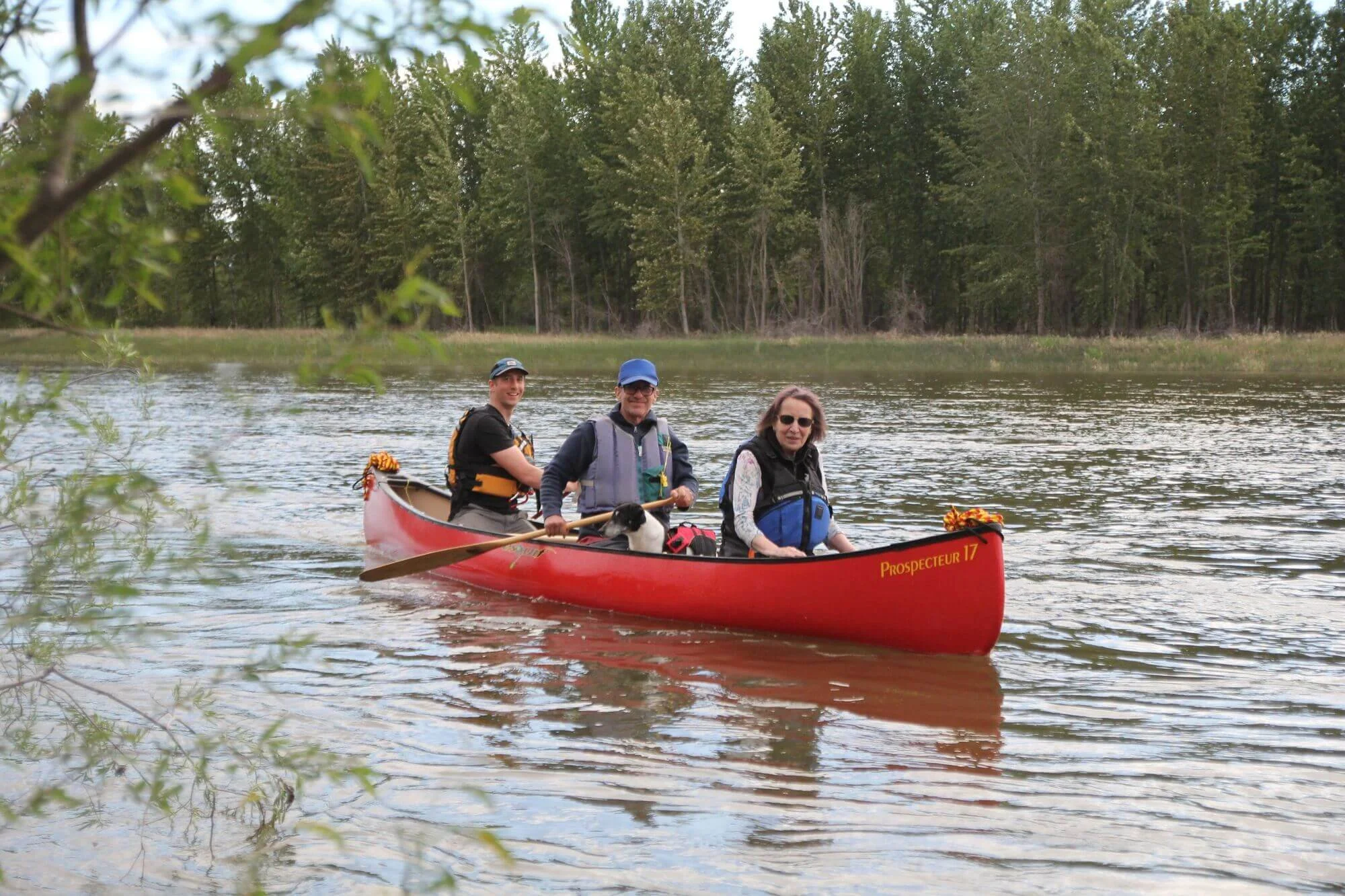
Most full size tandem tripping canoes are 16, 17 or 18 feet in length. Most solo tripping canoes are 14 - 15 feet in length. Longer canoes are usually faster. The width and hull shape also makes a difference. Wider canoes are generally more stable but slower.
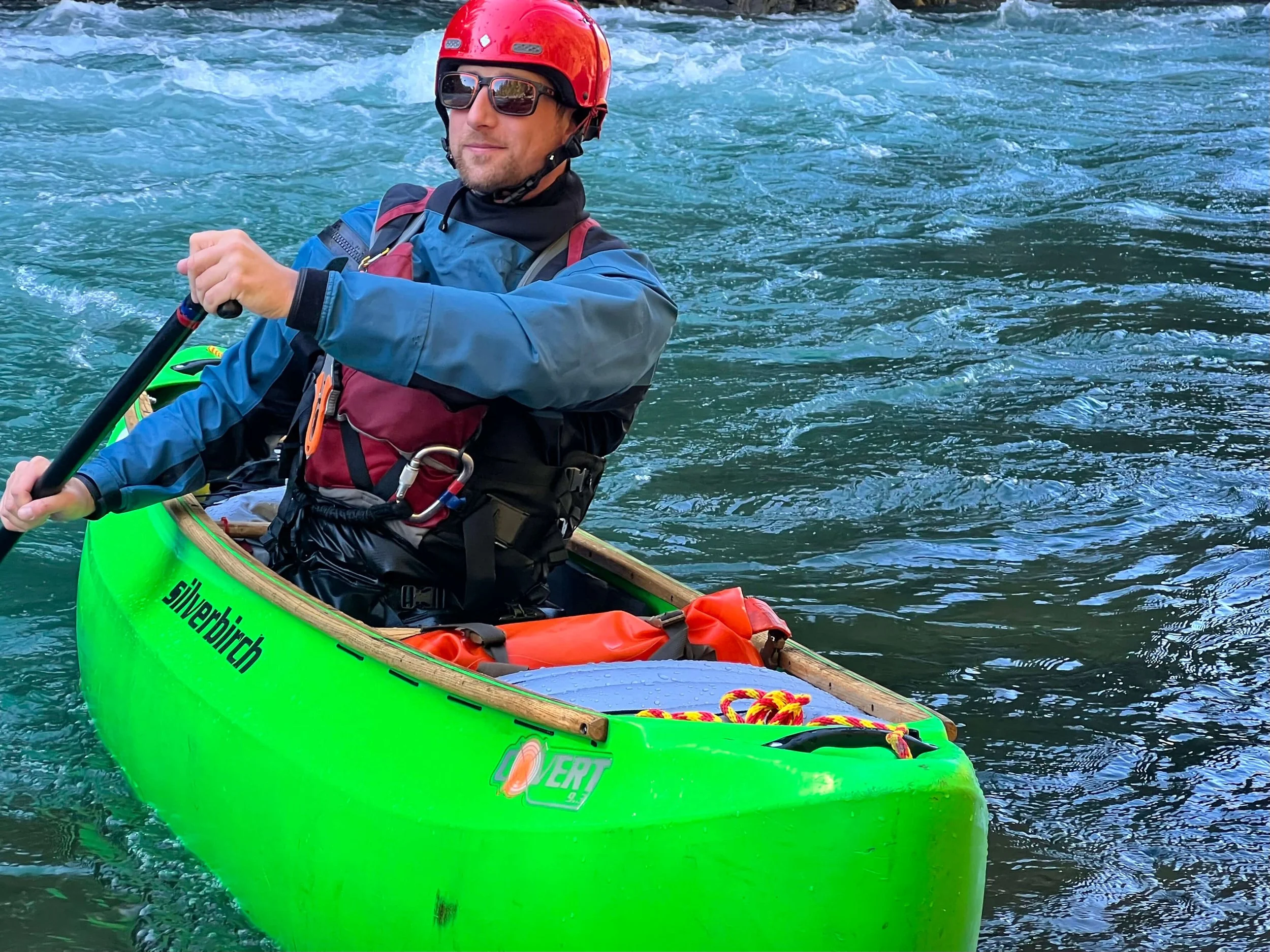
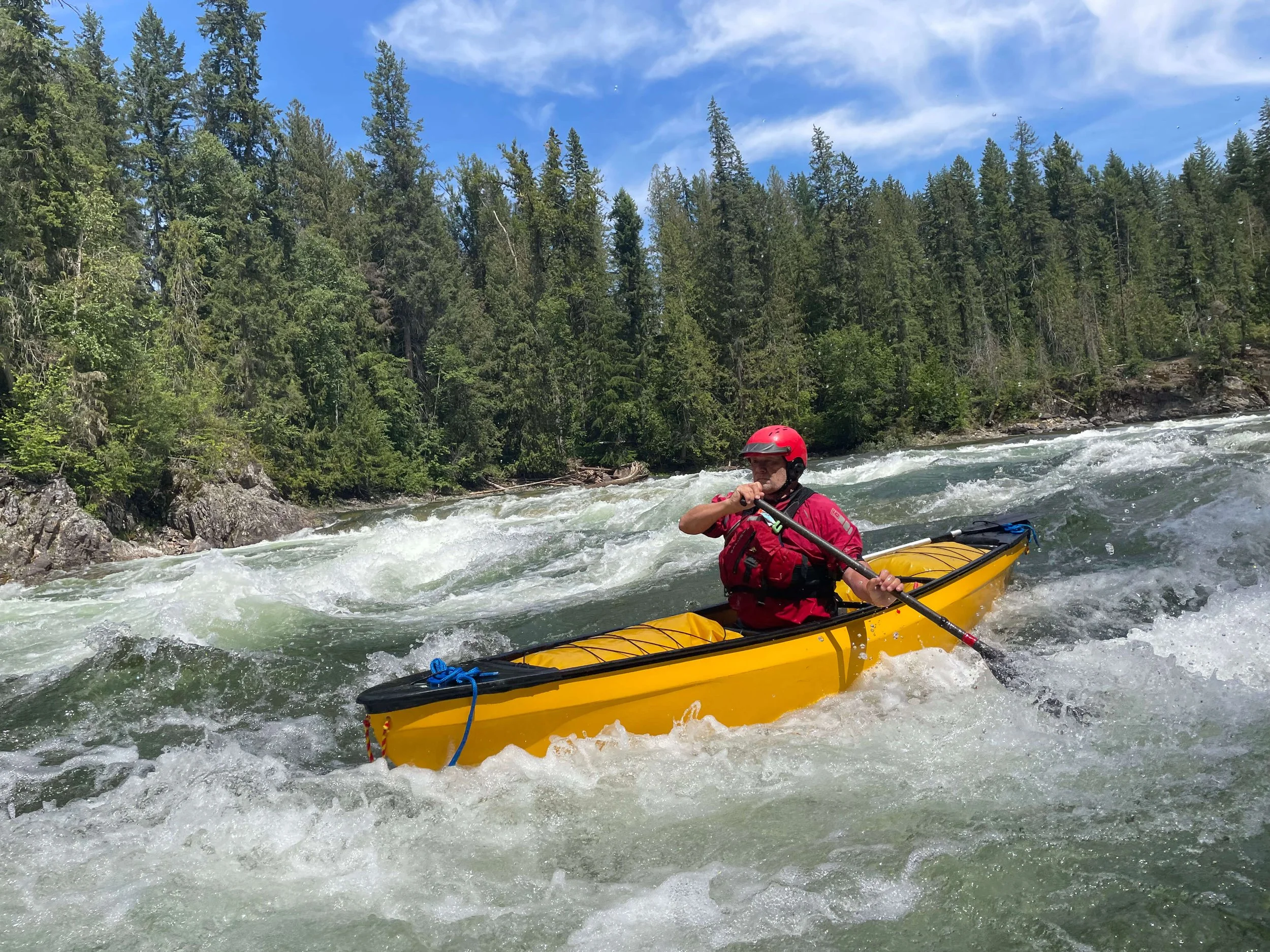
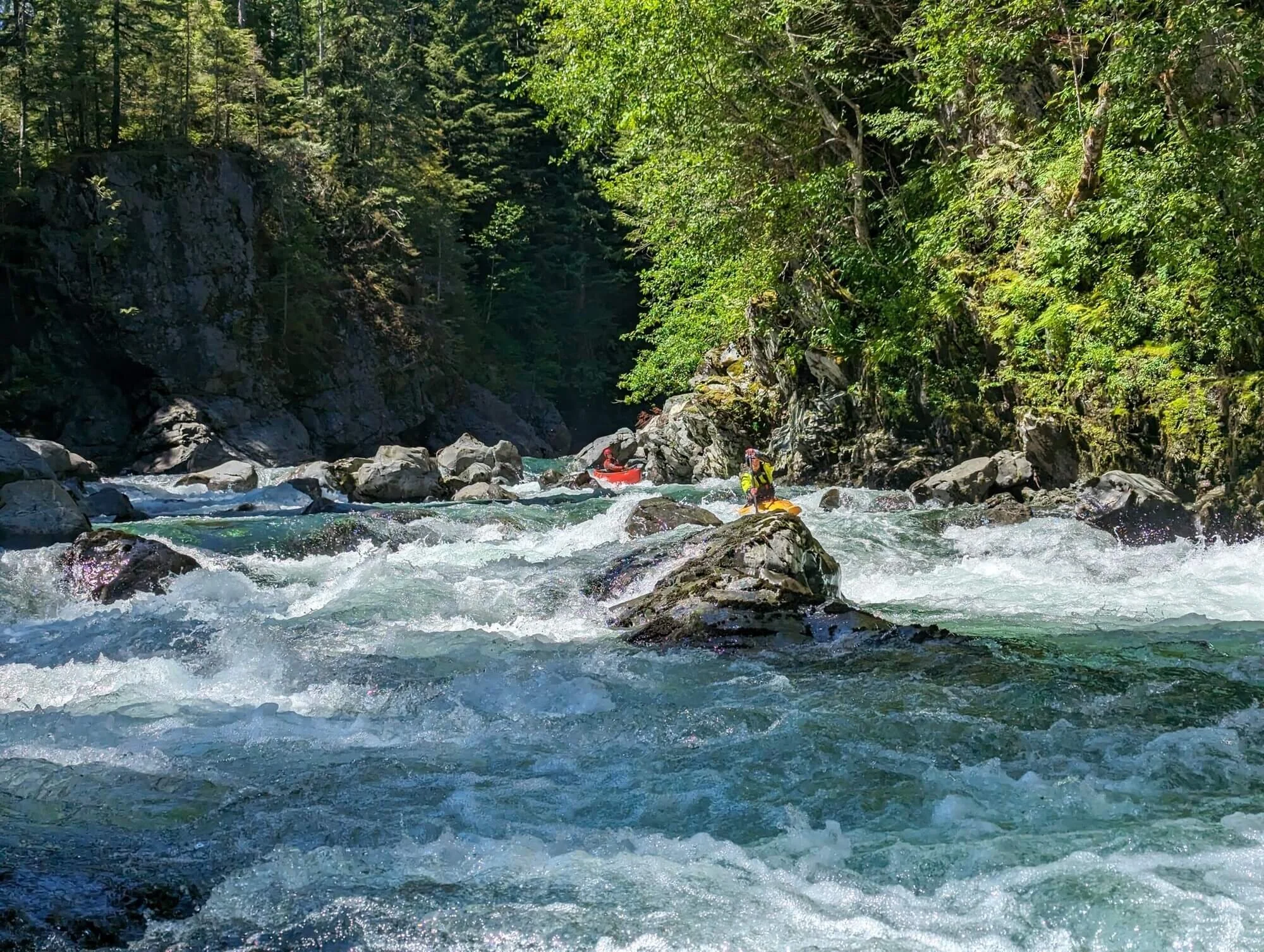
Whitewater canoes are normally shorter and have more rocker (curved like a banana) to be more maneuverable. Whitewater boats need lots of added flotation (foam or air bags) to prevent them from sinking or becoming pinned/ wrapped. They are usually made of very durable plastics like roto moulded polyethylene or Roylex/ T-Formex. At the extreme end of this spectrum are tiny OC-1 play boats and C-1s converted from kayaks that to many are barely recognizable as canoes!
Most canoes require additional after market outfitting such as anchor points, grab loops, thigh straps, air bags, lashing, painters, spray decks and more! Depending on the kind of canoeing you do, these features make them safer, more convenient, or more efficient.
And remember to buy a good paddle! There are equally many choices here and the right paddle for you and your style of canoeing make all the difference!
Environmental Safety Considerations
-
One of the most important safety considerations is to dress for the weather and when necessary dress for immersion! Sports clothing that is quick dry (Cotton Kills!) is recommended.
Depending on the weather, thermal layers, and a weather proof outer shell may also be needed. Proper footwear that doesn't fall off if you swim is also a good idea. Carry spare warm clothes in a dry bag and/or keep a change in the car or nearby on shore. You want to be certain if you get cold or wet you can re-warm yourself. Consider taking a fire starter, a tarp, etc.
-
In water less than 10 degrees Celsius you can expect 1 minute of shock, 10 minutes of useful physical activity such as the ability to swim or hold things, and 1 hour before you succumb to extreme hypothermia and die.
Even during summer many mountain rivers and lakes are cold. You should strongly consider wearing a wet suit or dry suit or taking other precautions like paddling in a group with experienced rescuers, staying close to shore, closely monitoring weather forecasts and conditions (especially for wind) to avoid and managing capsizing.
Always have a plan for what to do if you do go for an unintended swim and practice your rescues!
-
A canoeist hates nothing more than wind... It never seems to be a tailwind and it can get scary damn quick. The larger the body of water the larger the "fetch" and the larger the waves. It is important to monitor wind forecasts and make ongoing real world observations. Learning to canoe in the wind is especially demoralizing for the beginner. Even for experienced canoeists, wind over 30km/hr on a big body of water can start to produce whitecaps. Generally that means it's time to stay off the water!
You can sometimes paddle along the leeward (protected) shoreline, keep close to emergency landing beaches ,and avoid large crossings. You may also trim your canoe to make paddling easier (slightly bow heavy for head winds). In more adventurous expeditions some people use a spraydeck to prevent swamping in windy and wavy conditions.
Even with these mitigations in mind, wind needs to be respected in a canoe - It demands excellent skills, training, and practice. Rescues in wind can be extremely challenging, and many tragic accidents are due to wind!
Build Your Safety Skills on the Water
Learning in person is one of the best ways to improve your safety, rescue skills, and confidence on the water. Explore RCABC courses and connect with certified instructors across British Columbia.